
MultipleTooth Implants
What are Multiple Dental Implants?
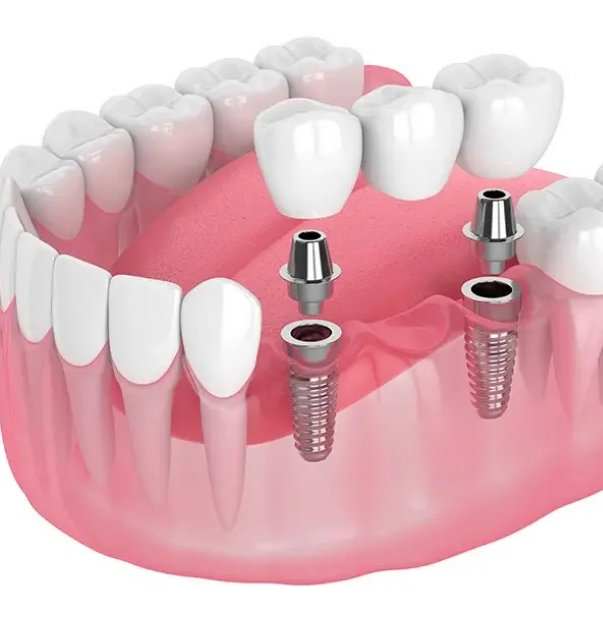
Multiple dental implants are a standard procedure in dentistry to help people deal with multiple missing teeth. In this process, dental implants and artificial teeth replace missing teeth without harming the nearby teeth and giving the most natural results. A dental implant consists of three parts.
Implants:
These are cylindrical screws made up of physiologically inert metal titanium and its alloys and are attached to the jawbone at the site of the missing teeth.
Abutments:
These are placed on top of the implants and connect the artificial teeth to the implants.
Prosthetic teeth:
These are artificial teeth usually designed in dental laboratories to adjust well in your mouth.
Why Do WeNeed Multiple Tooth Implants?
Multiple tooth implants provide several advantages over fixed bridges and removable partial dentures. In addition to looking and functioning like natural teeth, multiple tooth dental implants replace teeth without support from adjacent natural teeth.
Why should you do Multiple Tooth Implants ?
In addition, because multiple dental implants will replace some of your tooth roots, your bone will be better preserved. Dental implants integrate with your jawbone, helping to keep the bone healthy and your natural smile intact.
Candidates For Complete Dental Implants
Multiple dental implants are a highly effective treatment, but there are a few requirements before one may receive dental implants. Some of the elements include:
- The remaining teeth and gums must be in good condition.
- The individual should have healthy jawbone density. It is a crucial component needed for the implants to be correctly fixed.
- The person shouldn't use tobacco, drink alcohol, or smoke. It raises the risk of infection, which could result in implant failure.
- The individual must have the endurance to observe the appropriate safety measures for several months.
Dentists may counsel patients against obtaining implants in a number of situations. Among them are:
- Conditions that hinder the healing process, such as hyperglycemia and COPD
- Those with egregious gum or bone problems or inadequate dental hygiene.
- The dosages of people who take drugs that contain steroids or blood thinners cannot be changed.
- Patients receiving radiation therapy, particularly in the head or neck area.
Outcome of Multiple Tooth Implants
Patients have noticed that there are many benefits to having multiple tooth implants. The success rates of them are around 96% to 98%. However, there are a few things that patients can do to improve the chances of good results. This includes not smoking and having good oral hygiene.
Conditions that can be treated by this Procedure
Dental implants may be right for you if you –
Have one or more missing teeth.
Have a jawbone that's reached full growth.
Have adequate bone to secure the implants or are able to have a bone graft.
Have healthy oral tissues.
Don't have health conditions that will affect bone healing.
WhyMultipleTeeth Dental Implants?
You can use modern dentistry and replace the gap formed due to multiple missing teeth by placing an implant in the bone and taking the support from that implant to place a bridge.
Multiple teeth Dental implants provide several advantages over other teeth replacement options. In addition to looking and functioning like natural teeth, implant-supported bridges replace teeth without support from adjacent natural teeth. Other common treatments for the loss of several teeth, such as fixed bridges or removable partial dentures, are dependent on support from adjacent teeth.

The Pros and Cons of Getting Dental Implants
Pros of getting dental implants
Getting a whole new smile
More Cost-Effective to Replace Missing Tooth
They look and feel like natural teeth
Dental implants have the appearance of real teeth. In fact, once your implant has been fitted, you’ll hardly be able to tell the difference between your replacement tooth and your real teeth.
You can eat and chew with ease
Unlike dentures, implants won’t feel any different than your regular teeth when eating and chewing.
Dental implants can last a lifetime
Implants are a long-lasting tooth replacement solution. You may need to replace the crowns every 10-15 years, but if you look after the implants, they can last a lifetime.
They’re easy to take care of
You should take care of your implants the same way you would take care of your regular teeth with daily brushing and flossing, regular dental checkups and a healthy diet.
They prevent bone loss
Dental implants are anchored into your jaw, similar to your real teeth. The screw thread of the implant acts as the root of a natural tooth, so with dental implants, your jaw bone remains strong and you won’t experience bone loss.
Consof getting dental implants
Unsuitable for Some Patients
You have to meet a set of requirements. In order to have dental implant surgery, you first have to meet certain criteria.
It Can Be Time Consuming
Dental implants are not a quick fix and can take several months to complete. If you’re replacing an existing damaged tooth, this will first need to be removed.
The cost of the procedure
While dental implants are the best long term solution for tooth loss, they’re not always the most cost effective.
What Are theBenefits Of The Procedure
- Replacing multiple missing teeth using dental implants will help you prevent future bone loss.
- You can enjoy all your favorite food without the fear of implants breaking or coming out.
- Can mimic the strength of your natural tooth.
- Experts will develop custom-fabricated crowns that are placed over the abutments and will function like a real tooth. You don’t have to worry about future bone loss or difficulty in chewing your favorite food.
It is worth expanding on the fact that Invisalign aligners are removable for eating and brushing. Metal and other types of braces may limit the kinds of foods that patients can eat; this is not the case with Invisalign. The fact that they are removable also allows for normal brushing and flossing.
Types of dental implants -
The three most common types of dental implants are endosteal, subperiosteal, and zygomatic.
Endosteal is the most common and safe method. Subperiosteal comes next, and zygomatic is the most complicated.
There are four types of dental implant restorations that can be used to replace missing teeth.
Four types of restorations are called –
- Single tooth implants
- Implant supported dentures
- Full mouth acrylic (pmma)
- Full arch dental implants
Initial Consultation And Preparing Treatment Plan
The first step in the Invisalign process is an initial consultation with the dentist. Your teeth, jaw, mouth, and orthodontic and dental needs will be assessed and you will explain your end goals.
The dentist will make a plan of what can be done with Invisalign. You’ll get the cost, the treatment plan, the timeline, a schedule of appointments, and instructions on how to wear and take care of your Invisalign aligners.
How to prepare for dental implants:
Very importantly we want you to have eaten a decent meal prior to the procedure. This is to ensure you have adequate blood sugar levels during the placement of the dental implant(s), which is important for the first few hours of healing.
Wear light comfortable clothing, as we will place a protective gown over your clothing and it may get quite hot under there.
Please visit the loo prior to the implant placement on longer procedures for obvious reasons, it’s better things are not interrupted during the precise placement of your implant or implants.
Please inform us if you have changed any medication since your last visit to see us.
Unlike many other dental practices, we carry out our dental implant placements under strict sterile conditions, which can initially look intimidating. Please be reassured this is for your benefit and feel comforted that we adopt best practice for even the simplest of implant placements.
We will give you antibiotics, antiseptic mouthwash, and sometimes anti-inflammatory steroids to reduce post-operative discomfort, immediately prior to your procedure.
Multiple Dental Implant Procedure
The dental implant team at Dental offices will ensure you feel comfortable and understand the dental implant procedure each step of the way.
Consultation and treatment planning.
The procedure to replace multiple missing teeth with dental implants can differ depending on your individual case. Our team will consult with you to determine the best plan for your situation and prepare you for the upcoming procedure and recovery period.
Implant placement.
Placing multiple dental implants is a relatively minor procedure and can sometimes only require local anesthesia. If needed, our team can use sedation to ensure you feel comfortable throughout the procedure. During the procedure, multiple (depending on your specific treatment plan) titanium fixtures will be placed in the jaw leaving surrounding natural teeth intact.
Recovery time
After your dental implants are placed the healing and recovery time can take anywhere from three to six months, depending on how your body responds and the state of your current health. This time allows the implant to integrate into the bone. You’ll likely see the dentist that placed the implant a couple of times for postoperative checks. Once your implants are fully integrated into the jawbone, you’ll see your regular dentist or a prosthodontist to then have the implants restored by placing abutments and an implant-supported bridge.
Things to Avoid Doing After a Dental Implant Procedure
After implant treatment avoid rinsing your mouth and try not to disturb the surgical site with your tongue or fingers for the rest of the day. This may cause bleeding by dislodging the blood clot that has formed.
Don’t spit, suck on straws or smoke. This can also dislodge blood clots and slow down the healing process.
- Smoking - Dental implants rely on a process known as osseointegration, which is how the jawbone develops and grows around the implants.
- Excessive Rinsing.
- Intense Exercise.
- Hard or Hot Foods.
- Drinking with a Straw.

Risks And Complications
Like other orthodontic treatments, there are a few potential risks with Invisalign, such as:
Infection
An infection can occur at the surgical site and spread to other parts of the mouth, leading to complications such as implant failure or even bone loss.
Nerve damage
Nerves located near the implant site can become damaged during surgery, leading to numbness or tingling in the mouth, lips, or chin.
Implant failure
The implant may not properly integrate with the jawbone or may become loose, which can cause pain, discomfort, and difficulty chewing.
Allergic reactions
Some patients may experience an allergic reaction to the materials used in the implant, which can cause swelling, redness, and discomfort.
Sinus problems
If implants are placed in the upper jaw, they can protrude into the sinus cavity, leading to sinus problems such as sinus infections or pressure.
Gum recession
If the implant is not placed correctly, it can cause gum recession, which can lead to bone loss and even tooth loss in severe cases.
Pain and discomfort
It is common to experience some level of pain, swelling, and discomfort after surgery, which can be managed with pain medication and proper aftercare.
Damage to adjacent teeth
During the surgery, adjacent teeth can become damaged, leading to the need for additional dental work.
What to expect?
Home Care after Dental Implant Surgery
After dental implant surgery, the dentist will provide you with clear home care instructions to follow.
- Apply a cold compress to the side of your mouth with the dental implants for 20 minutes, then rest for 20 minutes for the first 24 hours to reduce swelling.
- Antibiotics will likely be prescribed to prevent potential infections that could lead to the loss of your dental implant. Take the antibiotic for the prescribed duration.
- Pain medication may be necessary for the first 3-4 days, but likely not beyond that.
- Avoid brushing the implant site for at least a couple of days and rinse with warm salt water to remove food debris and reduce potential inflammation.
- There may be medication to apply directly to the site or a prescription mouthwash to use.
- Stick to a soft foods diet for the first few days after surgery.
FAQs
What are dental implants, and how do they work?
Dental implants are artificial tooth roots that are surgically placed in the jawbone. They are made of titanium or other biocompatible materials that can fuse with the bone, providing a stable foundation for artificial teeth. Once the implants are placed, a dental crown or bridge is attached to the implant to replace the missing teeth.
How long does the dental implant procedure take, and is it painful?
The length of the dental implant procedure can vary depending on the number of teeth being replaced and the patient's overall oral health. Generally, it takes around 3-6 months for the implants to fully integrate with the bone. During the procedure, local anesthesia is used to numb the area, so you won't feel any pain. After the procedure, you may experience some discomfort or swelling, but this can be managed with pain medication and ice packs.
How do I care for my dental implants after the procedure?
Dental implants require the same care as natural teeth. You should brush twice a day, floss daily, and visit your dentist regularly for check-ups and cleanings. Avoid hard or sticky foods that could damage the implant or cause it to come loose. Your dentist may also recommend an antimicrobial mouthwash to prevent infection.

Can anyone get dental implants?
Most people who are in good general health and have healthy gums and sufficient jawbone density can get dental implants. However, certain conditions such as diabetes or smoking may affect the success of the implant. Your dentist will evaluate your oral health and determine if you are a good candidate for the procedure.
How much do dental implants cost?
The cost of dental implants can vary depending on several factors such as the number of implants, the type of implant used, and the complexity of the procedure. In general, dental implants are more expensive than other tooth replacement options such as dentures or bridges. However, they are also more durable and have a higher success rate. Your dentist can provide you with an estimate of the cost and discuss financing options.